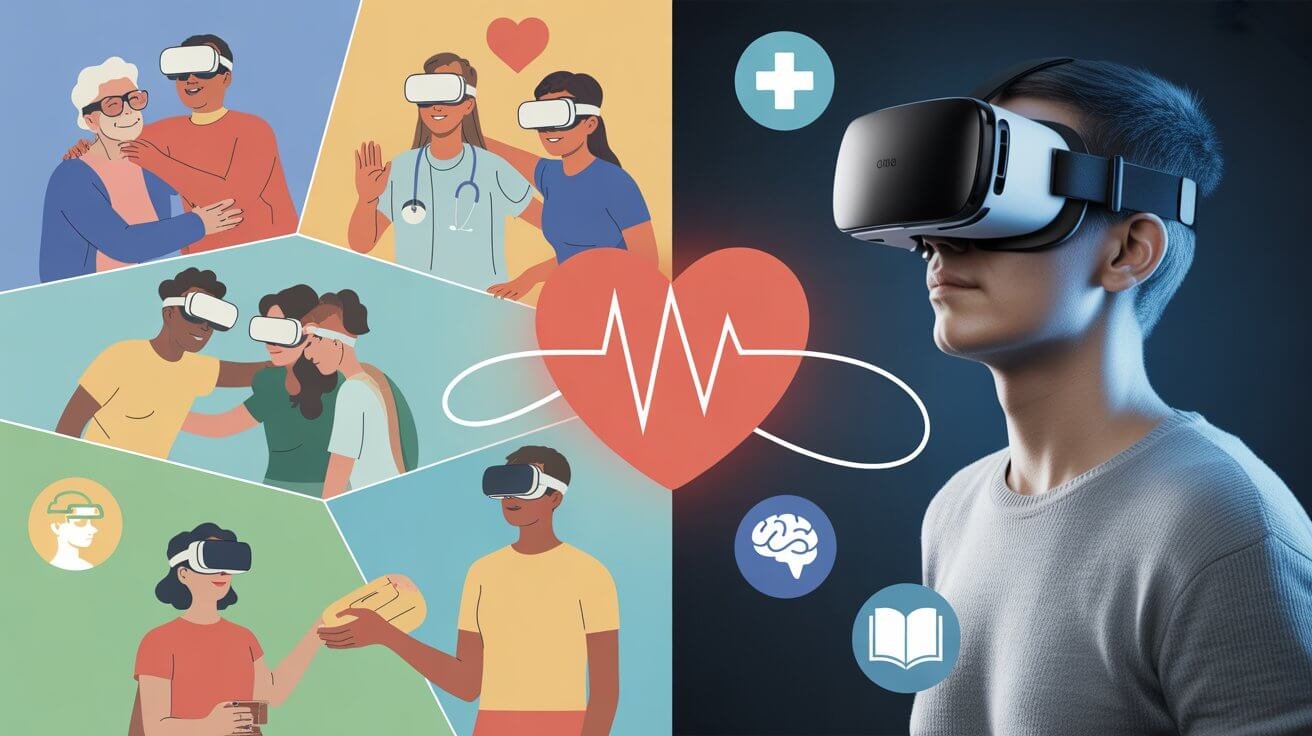

Virtual reality isn’t just changing how we play games anymore. Instead, VR social transformation is happening right under our noses, fundamentally altering how we connect, learn, and heal as human beings. Moreover, this VR social transformation goes far beyond the entertainment headlines – it’s creating new ways for isolated teenagers to find community, helping medical students develop empathy, and even treating anxiety disorders.
But here’s what most people don’t realize: we’re at a crucial turning point where VR could either bring us closer together or push us further apart.
The Mental Health Revolution: VR as Digital Therapy
Recent research shows that VR social transformation is most dramatic in mental health treatment. Furthermore, studies demonstrate that virtual reality creates safe spaces for people to practice social interactions without real-world consequences.
A groundbreaking study published in Scientific Reports found that social VR significantly reduced feelings of loneliness and social anxiety. Additionally, participants who used platforms like AltspaceVR during COVID-19 lockdowns reported meaningful improvements in their mental wellbeing.
“I feel it really does help me in social isolation,” one participant shared. “Becoming part of the community in Altspace has had a huge impact on my mental health. I was getting a little depressed in the fall and having this community has really felt like that it brought me out of it a bit.”
But the benefits extend beyond pandemic relief. Consequently, VR therapy is now treating specific phobias, PTSD, and social anxiety disorders with remarkable success rates. Moreover, immersive environments allow therapists and patients to work together in shared virtual spaces, making treatment more accessible and effective.
VR Educational Transformation: Learning Beyond Boundaries
The educational applications of VR social transformation are equally compelling. However, virtual classrooms are doing more than just making lessons interactive – they’re fundamentally changing how students develop empathy and social skills.
Medical education research reveals that VR training improved knowledge scores, shortened skill performance time, and increased student satisfaction compared to traditional methods. Furthermore, students using VR to experience aging, disabilities, or other perspectives show dramatically increased empathy levels.
One fascinating example involves first-year medical students who used VR to experience life from a geriatric patient’s perspective. Consequently, their understanding of empathy and patient care improved significantly after just six VR sessions.
Additionally, virtual reality breaks down geographical barriers in education. Students from different continents can now collaborate in shared virtual laboratories, attend lectures by world-renowned experts, and practice complex procedures together in risk-free environments.
The Dark Side: When Virtual Connection Replaces Real Relationships
However, VR social transformation isn’t all positive. Moreover, concerning research suggests that excessive VR use can lead to social isolation and decreased real-world interaction skills.
Studies from the University of Rochester warn that heavy VR users may struggle with genuine social interaction. Additionally, the ability to “hide behind avatars” or exit situations with a button press can prevent people from developing crucial coping mechanisms for real-world challenges.
The research shows particularly concerning effects for teenagers and young adults. Furthermore, those who spend excessive time in virtual environments may experience:
- Decreased extraversion in real-world situations
- Reduced ability to handle interpersonal conflicts
- Weakened team cohesion skills
- Increased anxiety when facing real social challenges
But it’s not all doom and gloom. Consequently, experts emphasize that balance is key – VR can enhance social skills when used appropriately but becomes problematic when it replaces all real-world interaction.
Healthcare Applications: VR Social Skills Training
Perhaps nowhere is VR social transformation more promising than in healthcare training and therapy. Additionally, virtual reality allows medical professionals to practice difficult conversations, develop bedside manner, and understand patient perspectives in unprecedented ways.
Recent research in healthcare education shows that VR-based training significantly improved healthcare professionals’ attitudes toward patients with mental health conditions. Moreover, the immersive nature of VR helps reduce stigma and increase empathy among medical staff.
Virtual reality also enables innovative treatment approaches:
- Social anxiety therapy: Patients practice interactions in safe virtual environments before real-world situations
- Autism support: VR helps individuals with autism develop social skills through controlled, predictable interactions
- PTSD treatment: Virtual environments allow gradual exposure therapy in controlled settings
- Elderly care: VR reduces isolation in care facilities by connecting residents with family and virtual communities
Real-World Success Stories: VR Communities Making a Difference
The true power of VR social transformation becomes clear through real success stories. Moreover, platforms like VRChat have become lifelines for people who struggle with traditional social interaction.
One study participant with physical disabilities shared: “VR gave me confidence I never had in real life. I could practice conversations and feel more comfortable, which actually helped me in face-to-face situations later.”
Similarly, research on adolescents with disabilities found that group-based VR gaming significantly reduced feelings of isolation and depression. Additionally, participants built meaningful relationships that extended beyond the virtual environment.
Educational institutions are also seeing remarkable results. Furthermore, schools using VR for social skills training report improved classroom dynamics and reduced bullying incidents.
Future Implications: Where VR Social Change Is Heading
Looking ahead, VR social transformation will likely accelerate as technology becomes more accessible and sophisticated. However, several key trends are emerging:
Haptic Technology Integration
Future VR will include touch sensations, making virtual hugs and handshakes feel real. Consequently, this could bridge the gap between virtual and physical connection in meaningful ways.
AI-Powered Social Avatars
Advanced AI will enable more realistic virtual beings for therapy and education. Additionally, these avatars could provide consistent, patient support for people developing social skills.
Mixed Reality Social Spaces
Augmented reality will blend virtual and real social interactions. Furthermore, this hybrid approach may address concerns about VR completely replacing real-world connection.
Global Accessibility
As VR costs decrease, these social benefits will reach underserved populations worldwide. Moreover, virtual therapy and education could become available in areas lacking traditional resources.
Practical Steps: How to Harness VR’s Social Benefits Responsibly
For individuals and organizations considering VR social transformation, here are evidence-based recommendations:
For Personal Use:
- Limit VR social time to 1-2 hours daily to maintain real-world connections
- Use VR as practice for real situations, not as a complete replacement
- Join moderated VR communities with clear behavioral guidelines
- Balance virtual social activities with face-to-face interactions
For Educational Institutions:
- Implement VR gradually alongside traditional teaching methods
- Train educators on both technical and social aspects of VR learning
- Monitor student wellbeing and social development carefully
- Create clear policies about appropriate VR use
For Healthcare Providers:
- Consider VR therapy for patients struggling with traditional approaches
- Ensure proper training for staff using VR therapeutic tools
- Maintain human oversight of all VR-based treatments
- Document outcomes to contribute to growing research base
Conclusion: Navigating the VR Social Revolution Thoughtfully
The VR social transformation is not a distant future possibility – it’s happening now. Moreover, early research suggests that virtual reality can enhance human connection, improve mental health, and expand educational opportunities in remarkable ways.
But success depends on thoughtful implementation. Additionally, we must resist the temptation to see VR as either completely good or completely bad. Instead, like any powerful tool, its impact depends entirely on how we choose to use it.
The key is balance. Furthermore, VR works best when it enhances rather than replaces human connection. Whether helping shy teenagers build confidence, allowing isolated seniors to reconnect with family, or training doctors to show greater empathy – virtual reality’s greatest promise lies in making us more human, not less.
As we move forward, consequently, the question isn’t whether VR social transformation will continue – it’s whether we’ll guide it toward outcomes that truly benefit humanity. The choice, quite literally, is in our hands.