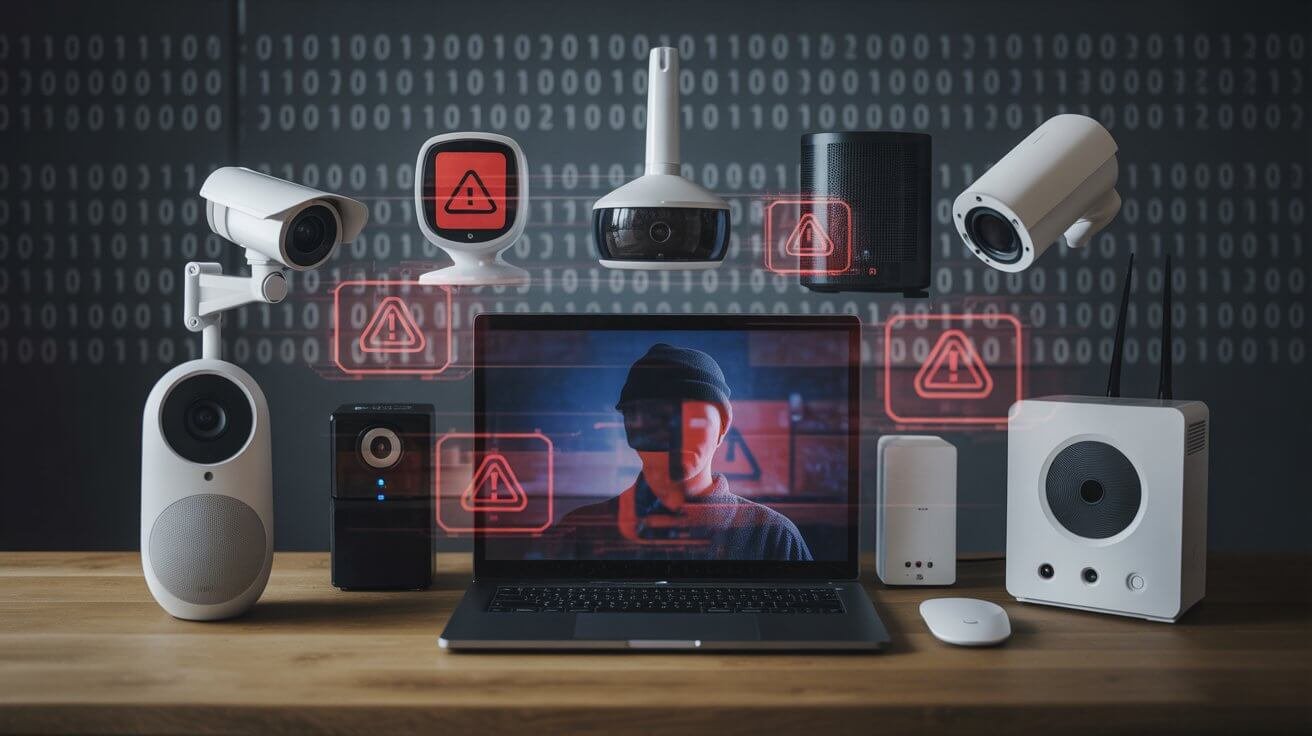

Your smart doorbell just helped hackers break into a Japanese bank. Meanwhile, your WiFi-enabled toothbrush is part of a botnet launching DDoS attacks across three continents. Sounds like science fiction? Unfortunately, these IoT device vulnerabilities are creating real-world chaos right now.
IoT device vulnerabilities have become the digital world’s biggest blind spot. While you’re worried about your laptop getting hacked, cybercriminals are already using your smart TV, security camera, and even baby monitor as stepping stones into your most sensitive data. The scariest part? Most people have no idea it’s happening.
The Shocking Reality of IoT Security in 2025
Let’s talk numbers that’ll make you want to unplug every smart device in your house. According to Verizon’s 2024 Data Breach Investigations Report, one in three breaches now involves an IoT device. That means every third cyberattack is coming through something you probably bought to make life more convenient.
Here’s what’s happening in the real world:
Every 24 hours, home network devices face an average of 10 attacks. Moreover, security solutions are blocking 2.5 million IoT threats daily—that’s roughly 1,736 threats per minute targeting smart homes worldwide.
The problem isn’t slowing down either. As reported by Forescout’s 2025 research, the overall average device risk score rose to 8.98—up 15 percent from 7.73 in 2024, showing an escalating threat landscape affecting all industries.
But here’s where it gets personal: IoT vulnerabilities cost businesses an average of $330,000 per incident. However, for consumers, the price isn’t just financial—it’s your privacy, security, and peace of mind.
Real-World Examples That’ll Keep You Up at Night
The $20 Billion Retail Nightmare
In 2024, retailers lost over $20 billion to IoT cyberattacks according to Statista. Hackers weren’t just stealing credit card data from point-of-sale terminals—they were using smart inventory trackers to disrupt entire supply chains, causing shortages that rippled through the economy.
When Smart TVs Turned Into Spy Networks
Remember the BadBox malware incident? More than 10 million smart TVs, digital projectors, in-car infotainment systems, and digital picture frames were compromised. These devices weren’t just mining cryptocurrency or sending spam—they were enrolled into a global botnet for click-fraud campaigns, account hijacking, and DDoS attacks.
The malware was distributed in three terrifying ways:
- Pre-installed on devices before purchase
- Downloaded automatically when devices first connected to the internet
- Retrieved from third-party app marketplaces
The Roku Reality Check
The 2024 Roku attack hit home for millions of families. Over 576,000 accounts were compromised through credential stuffing attacks, where hackers used stolen passwords from other breaches. This wasn’t sophisticated hacking—it was cybercriminals capitalizing on people reusing passwords across multiple devices and services.
Botnets Hiding in Plain Sight
Since late 2024, security researchers have tracked large-scale DDoS attacks from an IoT botnet exploiting wireless routers and IP cameras. The majority of compromised devices were:
- 80% wireless routers (mostly TP-Link and Zyxel)
- 15% IP cameras (primarily Hikvision)
- 57% located in India, 17% in South Africa
These weren’t abandoned devices in some dark corner of the internet. They were sitting in homes and offices, faithfully doing their jobs while secretly participating in cyberattacks.
The Hidden Dangers in Your Smart Home
Why IoT Devices Are Hacker Magnets
IoT device vulnerabilities exist because these gadgets are fundamentally different from your laptop or smartphone. They’re designed to be cheap, efficient, and easy to use—not secure.
Here’s what makes them so vulnerable:
Limited computational power: Most IoT devices can’t run sophisticated security software. They’re built with minimal processing power to keep costs low and battery life long.
Default passwords everywhere: Most businesses deliver gadgets with default passwords and don’t even advise customers to change them. This affects security cameras, home routers, and smart lighting systems.
Weak or missing encryption: Many IoT devices transmit data over networks without proper encryption, making it easy for attackers to intercept sensitive information.
Rare security updates: Unlike your smartphone that gets regular security patches, many IoT devices never receive updates after purchase. Unpatched firmware is responsible for 60% of IoT security breaches according to the IoT Security Foundation.
The Attack Surface You Can’t See
Your typical home now has an average of 21 connected devices. Each one represents a potential entry point for cybercriminals. But unlike traditional computers, these devices are often “invisible”—you set them up once and forget about them.
According to NETGEAR’s 2024 IoT Security Report, buffer overflow vulnerabilities account for 28.25% of discovered security flaws, while denial of service vulnerabilities make up 27.20%. These technical-sounding problems translate to real-world consequences: hackers can crash your devices, steal your data, or use your network to attack others.
Practical Steps to Secure Your Connected World
Immediate Actions You Can Take Today
Change every default password: This seems obvious, but cybercriminals continue to exploit factory-default or weak passwords to gain access to IoT devices according to Nozomi Networks. Use unique, strong passwords for each device.
Enable two-factor authentication: Wherever available, add that extra layer of security. It won’t stop all attacks, but it makes hackers’ jobs much harder.
Segment your network: Create a separate network for IoT devices. This prevents compromised smart devices from accessing computers containing sensitive information.
Update firmware regularly: Check for updates monthly. If your device doesn’t support updates, consider replacing it with one that does.
Advanced Protection Strategies
Use network monitoring tools: Solutions like NETGEAR Armor can detect and block suspicious traffic before it reaches your devices.
Implement device discovery: You can’t protect what you don’t know exists. Regularly audit all connected devices on your network.
Choose security-focused brands: Some manufacturers prioritize security over convenience. Research companies’ track records for addressing vulnerabilities and providing ongoing support.
Apply the principle of least access: Only give devices the minimum permissions they need to function. Smart light bulbs don’t need internet access—they just need to connect to your home network.
Industry and Government Response
Regulatory Changes Coming Fast
The EU Cyber Resilience Act (CRA) starting in 2026/2027 will require all manufacturers selling products in the EU to meet enhanced cybersecurity requirements. However, many companies aren’t prepared for these changes.
The NIST IoT Cybersecurity Framework provides detailed security guidelines, but adoption remains voluntary in most regions.
What Manufacturers Are Finally Doing
Some companies are stepping up their security game:
- Better default configurations: Newer devices increasingly require users to create unique passwords during setup
- Automatic security updates: Some manufacturers now push critical security patches automatically
- Bug bounty programs: Companies are offering rewards to security researchers who find vulnerabilities before criminals do
Future Implications: What’s Coming Next
The IoT Explosion Continues
The U.S. IoT market is set to surge by 24.7% by 2030, growing from $118.24 billion in 2023 to $553.92 billion according to Fortune Business Insights. This means exponentially more devices—and exponentially more attack opportunities.
Emerging Threats on the Horizon
AI-powered attacks: Cybercriminals are using artificial intelligence to discover vulnerabilities faster than ever before.
Supply chain compromises: We’re seeing more devices arrive pre-infected with malware, making traditional security measures ineffective.
Critical infrastructure targeting: AVTECH IP cameras used in critical infrastructure sectors like finance, healthcare, and transportation have been compromised to spread Mirai malware.
The Race Between Security and Convenience
The fundamental tension remains: consumers want devices that work seamlessly out of the box, while security requires configuration, maintenance, and vigilance. The companies that solve this balance will dominate the future IoT landscape.
Your Action Plan for 2025
Start with an inventory: List every connected device in your home and workplace. Include obvious ones like smart TVs and hidden ones like WiFi-enabled appliances.
Prioritize by risk: Focus first on devices that access sensitive data or control critical functions. Smart locks and security cameras deserve more attention than smart light bulbs.
Create a maintenance schedule: Check for updates monthly, review access permissions quarterly, and audit your entire setup annually.
Stay informed: Subscribe to security alerts from manufacturers and follow cybersecurity news. The threat landscape changes constantly.
Conclusion
IoT device vulnerabilities aren’t going away—they’re becoming more sophisticated and more dangerous. But you don’t need to abandon the convenience of connected devices. You just need to approach them with the same security mindset you’d apply to any valuable asset.
The days of “plug in and forget” are over. In 2025, smart device ownership requires active security management. The good news? The steps aren’t complicated, and the tools are getting better. The bad news? Ignoring these vulnerabilities isn’t an option anymore.
Your smart devices can either be assets that enhance your life or weapons that criminals use against you. The choice—and the responsibility—is yours. Make it count.