
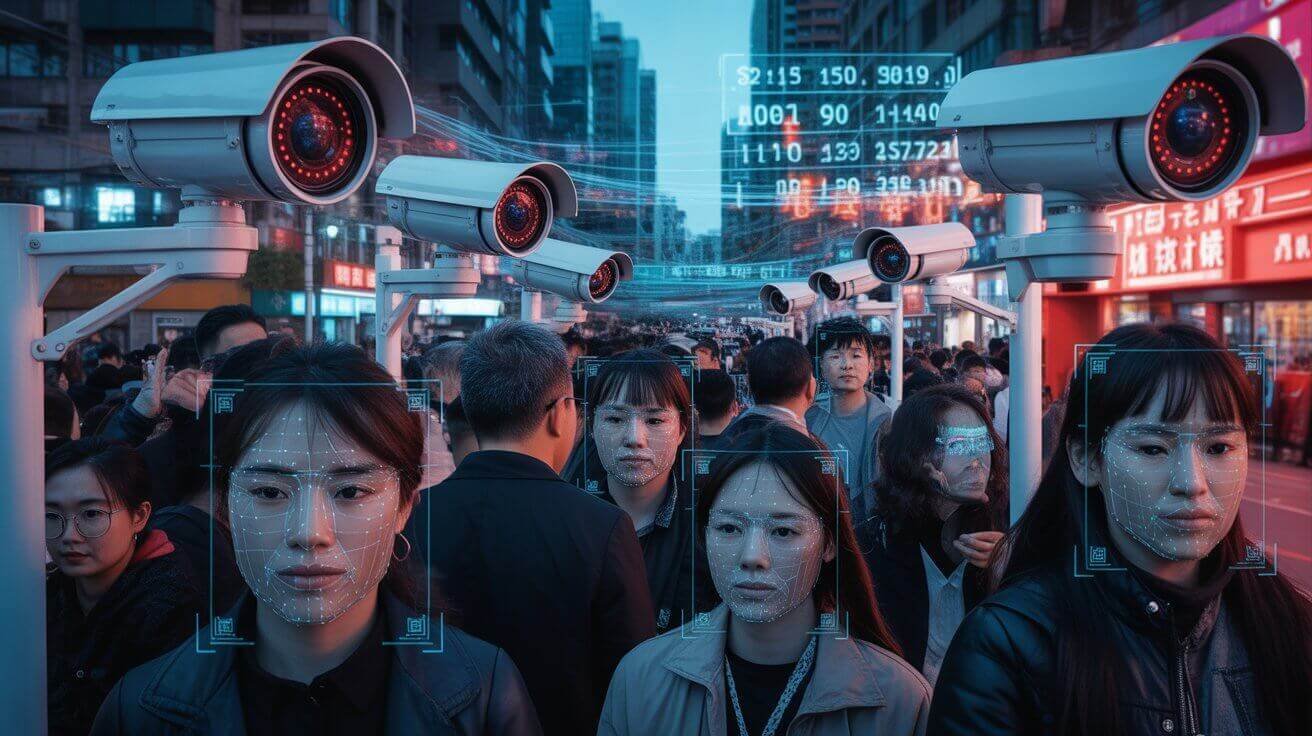

Digital surveillance systems China has deployed represent the world’s most comprehensive citizen monitoring network. These digital surveillance systems China uses have evolved far beyond what most people imagine, creating a surveillance ecosystem that tracks, analyzes, and influences the behavior of 1.4 billion people. While Western media often portrays digital surveillance systems China operates as dystopian science fiction, the reality is both more complex and more concerning than headlines suggest.
I’ve spent months researching how digital surveillance systems China actually employs to monitor its citizens, and what I discovered challenges many assumptions about this monitoring infrastructure. Furthermore, these digital surveillance systems China has perfected are quietly spreading beyond the country’s borders, potentially reshaping how governments worldwide approach citizen surveillance.
The Real Architecture of Digital Surveillance Systems China Uses
Most people think China operates one massive surveillance network. That’s not quite right. Instead, digital surveillance systems China has built represent what experts call “fragmented authoritarianism” – multiple overlapping monitoring networks that work together.
The Social Credit System is a record system so that businesses, individuals, and government institutions can be tracked and evaluated for trustworthiness. However, it’s just one piece of a much larger surveillance puzzle. The system includes several key components:
The Golden Shield Project launched in 1998, created the foundation for today’s digital surveillance infrastructure. This includes the Golden Shield, or jindun gongcheng program. GSP is a surveillance initiative launched by the state in 1998. This project digitized China’s public security apparatus and laid the groundwork for modern surveillance capabilities.
Skynet Camera Network represents the physical layer of surveillance. As of 2019, it is estimated that 200 million monitoring CCTV cameras of the “Skynet” system have been put to use in mainland China, four times the number of surveillance cameras in the United States. These aren’t just regular cameras – they’re equipped with facial recognition and real-time AI analysis.
The Social Credit System functions as the scoring mechanism. But here’s what’s important: there is currently no unified score for individuals, there are currently various social credit measures in place that vary by location and industry. The system operates more like multiple credit reports than one universal score.
How Digital Surveillance Systems China Operates Actually Function
The technology behind digital surveillance systems China deploys is surprisingly advanced. Chinese authorities have created what researchers call “city brains” – AI systems that process surveillance data in real time.
China’s increasingly powerful AI surveillance systems use facial recognition and combine data streams to create sophisticated “city brains” that can track events in real time. These systems don’t just watch – they predict and respond.
In practice, the surveillance works through multiple data collection methods:
- Biometric scanning including facial recognition, voice recognition, and gait analysis
- Digital footprint monitoring tracking online purchases, social media activity, and app usage
- Location tracking through mobile phones, transport cards, and vehicle monitoring
- Financial surveillance monitoring all digital payments and banking activities
What makes this particularly effective is data integration. Xinjiang’s Integrated Joint Operations Platform gathers data on residents using iris scanners, CCTV cameras with face and voice recognition, and DNA sampling. It links this data with residents’ online activity, banking information, phone calls and text messages.
The Myths vs. Reality of Digital Surveillance Systems China Employs
Western coverage often gets key facts wrong about digital surveillance systems China uses. According to MIT Technology Review, let me clear up the biggest misconceptions:
Myth: Everyone has a social credit score Reality: Such scoring systems have had very limited impact in China, since they have never been elevated to provincial or national levels. Most Chinese citizens don’t have a unified social credit score.
Myth: AI makes all the decisions Reality: In practice, the Social Credit System is highly fragmented and often reliant on human decision-making. While technology assists surveillance, humans still make many enforcement decisions.
Myth: It monitors everything automatically Reality: The system focuses primarily on specific behaviors and violations rather than general life monitoring. While the SCS is widely described by the Western news media as a means of “big brother” or political control, we find that it is a complicated system that focuses primarily on financial and commercial activities.
However, this doesn’t make the surveillance less concerning. The real issue isn’t the current capabilities of digital surveillance systems China operates – it’s the direction these monitoring networks are heading.
Current Expansion: How Digital Surveillance Systems China Developed Are Spreading Globally
Digital surveillance systems China perfected aren’t staying within Chinese borders. The technology is spreading globally at an alarming rate.
Chinese tech companies have already provided artificial intelligence–based mass surveillance systems to at least 18 countries, some which have poor human rights records. This expansion happens through several channels:
Direct technology exports include surveillance cameras, facial recognition software, and data analysis platforms. Companies like Hikvision and Dahua dominate global surveillance markets.
Smart city projects funded through China’s Belt and Road Initiative often include surveillance components. The party-state utilizes multilateral institutions like the BRICS, the Belt and Road Initiative, and the Forum on China-Africa Cooperation (FOCAC) to promote its surveillance platforms across the Global South.
Technical partnerships with other governments help implement similar systems worldwide.
What This Means for Individual Privacy and Freedom
The implications extend far beyond China. These digital surveillance systems represent a new model of governance that other countries are studying and potentially adopting.
The Chinese government has set up a series of mechanisms aimed at asserting its dominance in cyberspace. It has also increasingly combined an extensive physical infrastructure of surveillance and coercion with cutting-edge digital technologies.
For individuals living under these systems, the psychological impact is significant. Research shows that almost 90 per cent of citizens adopted one or more mental tactics to distance, and mentally protect themselves, from surveillance. People develop coping mechanisms including self-censorship, behavior modification, and what researchers call “performative compliance.”
The broader concern is normalization. As surveillance becomes routine, citizens gradually accept monitoring as normal. This process happens slowly, making it difficult to recognize until extensive surveillance infrastructure is already in place.
Looking Ahead: The Future of Digital Surveillance Systems China Pioneered
Recent developments suggest digital surveillance systems China has developed will continue expanding and improving. In March 2025, China published new guidelines to improve the social credit system amid efforts to promote its high-quality development. The 2025 guidelines include 23 new measures that further integrate surveillance into government operations.
Technology improvements make surveillance more sophisticated. Advances in AI, 5G networks, and Internet of Things devices create new monitoring possibilities that were impossible just a few years ago.
International adoption seems likely to continue. More countries are implementing similar monitoring networks, often using Chinese technology and expertise. The Carnegie Endowment warns that this trend raises significant concerns about global privacy and freedom.
The question isn’t whether surveillance technology will improve – it will. The question is whether democratic societies can establish meaningful limits on government monitoring capabilities before comprehensive surveillance infrastructure becomes entrenched.
Conclusion
Digital surveillance systems China has created represent more than just domestic policy – they’re a preview of how technology might reshape the relationship between governments and citizens worldwide. While the current monitoring infrastructure isn’t the omniscient AI network often portrayed in Western media, it’s evolving rapidly toward more comprehensive surveillance capabilities.
Understanding digital surveillance systems China employs matters because similar technologies are already spreading globally. The choices democratic societies make today about surveillance limits, data protection, and government monitoring powers will determine whether we maintain privacy and freedom in an increasingly monitored world.
The technology exists. The question is how societies choose to use it.