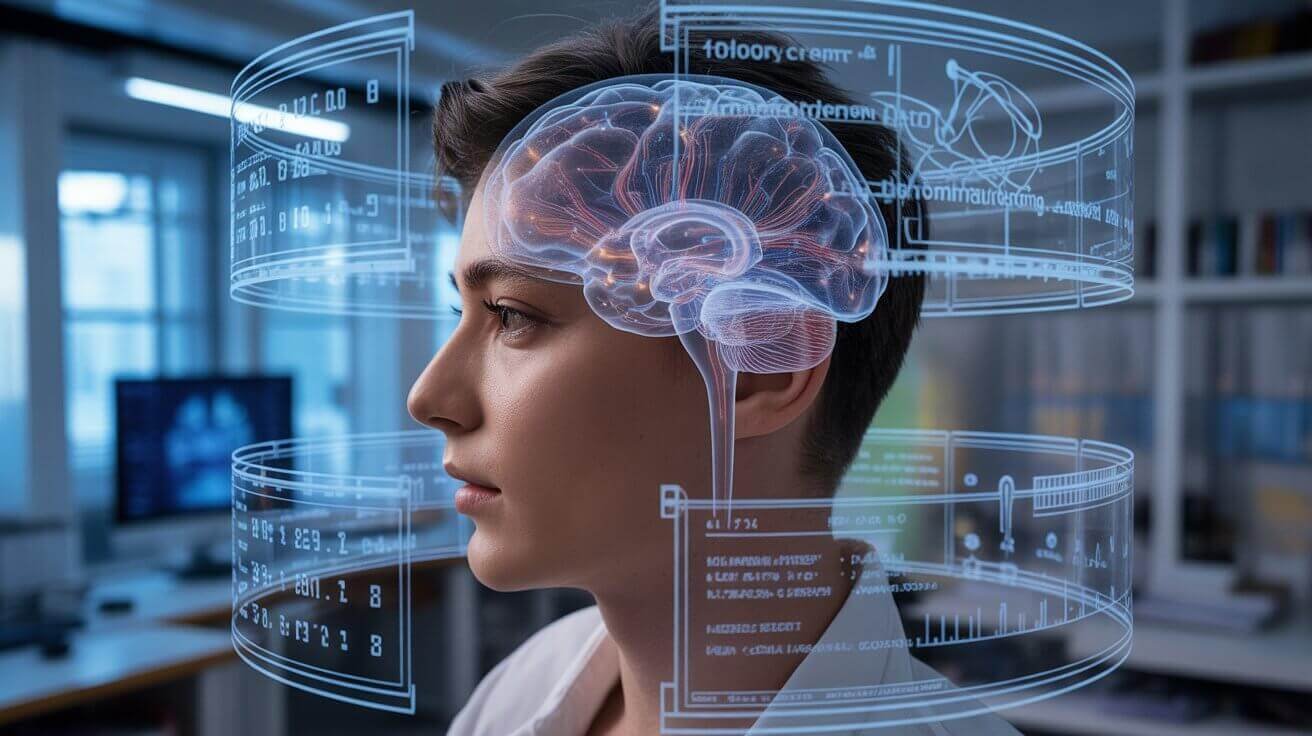

Imagine boosting your memory by 1000 times, solving complex problems instantly, or learning new skills in minutes instead of months. This isn’t science fiction anymore—cognitive enhancement technology is rapidly transforming from fantasy into reality. Moreover, these brain-boosting innovations are already reshaping how we think, learn, and interact with the world around us.
The era of cognitive enhancement technology promises unprecedented improvements to human mental capabilities. Furthermore, recent breakthroughs in neuroscience and artificial intelligence suggest we’re approaching a tipping point where 1000x cognitive improvements might actually be possible within our lifetime.
This technological revolution isn’t just about making smart people smarter—it’s about fundamentally changing what it means to be human. Therefore, understanding these developments now helps you prepare for a future where enhanced cognition becomes as common as smartphones are today.
The Current State of Cognitive Enhancement Technology
Today’s cognitive enhancement technology encompasses everything from simple brain-training apps to sophisticated neural implants. However, the field is evolving rapidly, with companies like Neuralink making headlines for successful human brain chip implants.
Recent advances in neuroscience have paved the way to innovative applications that cognitively augment and enhance humans in various contexts. Moreover, researchers are developing technologies that can observe and influence brain activity with unprecedented precision.
Current approaches to cognitive enhancement technology fall into three main categories:
Pharmacological Enhancement: Medications like modafinil and methylphenidate that boost focus and alertness. Although originally designed for medical conditions, healthy individuals increasingly use these drugs to enhance cognitive performance.
Physical Stimulation: Techniques such as transcranial magnetic stimulation (TMS) and transcranial direct current stimulation (tDCS) that use electromagnetic fields to stimulate specific brain regions. Furthermore, these methods can temporarily improve attention, memory, and problem-solving abilities.
Brain-Computer Interfaces: The most futuristic category, involving direct connections between the brain and external devices. Additionally, companies like Neuralink are pioneering implantable chips that could eventually allow humans to interface directly with artificial intelligence.
Real-World Applications Today
Current brain-computer interface systems are already helping paralyzed patients control computers and prosthetic limbs through thought alone. Moreover, the technology is advancing rapidly, with some systems achieving communication speeds of 62 words per minute—approaching normal conversation rates.
The market for cognitive enhancement technology is exploding. Research shows the brain-computer interface market alone is projected to reach $3.1 billion by 2030, growing at 10.3% annually. Therefore, we’re witnessing the early stages of a cognitive revolution.
The Science Behind 1000x Enhancement
The idea of 1000x cognitive enhancement might sound impossible, but scientific evidence suggests it’s theoretically achievable. Furthermore, our brains already demonstrate incredible plasticity and untapped potential that technology could unlock.
Studies reveal that current neurotechnologies can enhance specific cognitive functions by 20-50% in controlled settings. However, combining multiple approaches—pharmaceutical, technological, and behavioral—could produce exponential improvements rather than additive ones.
Consider how existing technology already provides cognitive multiplication:
- Smartphones give us instant access to humanity’s collective knowledge
- GPS systems eliminate the need to memorize routes
- Calculators perform complex mathematical operations instantly
- Translation apps break down language barriers in real-time
But these are external tools. Next-generation cognitive enhancement technology aims to integrate these capabilities directly into our neural networks.
The Neural Substrate for Enhancement
Research from leading neuroscientists shows that human brains operate at only a fraction of their theoretical capacity. Moreover, the brain’s incredible plasticity means it can form new connections and pathways throughout life, providing the biological foundation for dramatic enhancement.
Brain-computer interfaces could potentially:
- Directly download information into memory centers
- Accelerate learning by stimulating optimal neural pathways
- Connect multiple brains to create collective intelligence networks
- Interface with AI systems to augment human reasoning capabilities
Therefore, 1000x enhancement becomes plausible when we consider combining biological optimization with artificial intelligence integration.
Practical Applications You Can Use Today
While we wait for futuristic brain implants, several cognitive enhancement technologies are available right now. Moreover, these current tools provide a glimpse into what’s coming while offering immediate benefits.
Digital Cognitive Training
Modern brain-training applications use sophisticated algorithms to challenge and strengthen specific cognitive abilities. Furthermore, research shows that targeted cognitive training can improve working memory, attention, and processing speed by 10-30%.
Popular platforms include:
- Lumosity: Offers games targeting memory, attention, and problem-solving
- Peak: Focuses on mental agility and cognitive flexibility
- Elevate: Emphasizes practical skills like reading comprehension and math
- CogniFit: Provides personalized training based on cognitive assessments
Nootropic Supplements
Natural and synthetic nootropics offer cognitive benefits with fewer side effects than pharmaceutical options. Additionally, many of these substances work by optimizing neurotransmitter function or improving brain blood flow.
Evidence-based options include:
- L-theanine + Caffeine: Improves focus while reducing jitters
- Creatine: Enhances mental energy and working memory
- Bacopa Monnieri: Supports long-term memory formation
- Lion’s Mane: Promotes nerve growth and cognitive function
Wearable Neurotechnology
Consumer-grade devices now allow individuals to monitor and influence their brain states in real-time. Furthermore, these wearables represent the first step toward more advanced cognitive enhancement technology.
Current options include:
- Muse Headband: Provides real-time feedback during meditation
- Focus Cap: Uses tDCS to enhance attention and learning
- Neurable: Detects cognitive load and attention levels
- EMOTIV: Monitors brainwaves and emotional states
Optimize Your Environment for Enhancement
Simple environmental modifications can significantly boost cognitive performance without any technology. Moreover, these strategies complement technological approaches for maximum benefit.
Lighting Optimization: Use bright, blue-enriched light during work hours and warm light in the evening to optimize circadian rhythms and alertness.
Temperature Control: Maintain workspace temperatures between 68-72°F for optimal cognitive performance, as both hot and cold environments impair mental function.
Noise Management: Use white noise or nature sounds to mask distracting environmental noise while avoiding complete silence, which can actually reduce performance.
Ergonomic Setup: Proper posture and comfortable seating reduce cognitive load from physical discomfort, freeing mental resources for complex tasks.
Future Implications and Societal Impact
The widespread adoption of cognitive enhancement technology will fundamentally reshape society, education, and human relationships. Furthermore, these changes will happen faster than most people expect, requiring careful consideration of the implications.
The Enhancement Divide
Experts warn that cognitive enhancement technology could create unprecedented social inequality. Moreover, if enhancement remains expensive and exclusive, it might widen the gap between enhanced and unenhanced individuals.
This “cognitive divide” could manifest in several ways:
- Enhanced individuals dominating competitive fields like medicine, law, and academia
- Educational systems struggling to accommodate both enhanced and unenhanced students
- Workplace discrimination favoring cognitively enhanced employees
- Democratic processes influenced by enhanced individuals with superior reasoning abilities
Therefore, ensuring equitable access to cognitive enhancement technology becomes a critical social justice issue.
Educational Revolution
Traditional education systems will need complete overhaul as cognitive enhancement technology advances. Furthermore, when students can download knowledge instantly or connect directly to AI tutors, memorization-based learning becomes obsolete.
Future education might involve:
- Direct Knowledge Transfer: Students receiving information downloads instead of traditional lessons
- Accelerated Skill Acquisition: Learning complex subjects in days rather than years
- Personalized Neural Optimization: Customizing enhancement protocols for individual learning styles
- Collaborative Intelligence Networks: Students sharing cognitive resources in real-time
Economic Transformation
Industry analysts predict that neurological enhancement will become a condition of employment in many fields by 2034. Additionally, companies may soon monetize direct access to customers’ thoughts and emotions through brain-computer interfaces.
Potential economic changes include:
- Job requirements specifying minimum cognitive enhancement levels
- New industries focused on neural optimization and maintenance
- Intellectual property laws governing enhanced cognitive abilities
- Insurance models covering enhancement-related risks and liabilities
Ethical and Legal Challenges
The development of cognitive enhancement technology raises profound questions about human identity and autonomy. Moreover, current legal frameworks are completely unprepared for these technological advances.
Key ethical considerations include:
- Consent and Coercion: When does cognitive enhancement become mandatory rather than optional?
- Identity and Authenticity: Are enhanced achievements truly “yours” if technology made them possible?
- Privacy and Mental Freedom: Who controls access to your thoughts and mental processes?
- Enhancement vs. Treatment: Where do we draw the line between medical therapy and human improvement?
Preparing for the Cognitive Revolution
As cognitive enhancement technology advances rapidly, individuals and organizations must prepare for inevitable changes. Furthermore, taking action now positions you advantageously for the enhanced future ahead.
Personal Preparation Strategies
Stay Informed: Follow developments in neuroscience and brain-computer interface research through scientific journals and reputable technology publications.
Experiment with Current Tools: Try available cognitive enhancement options like nootropics, brain training, and meditation to understand what works for your unique brain chemistry.
Develop Meta-Cognitive Skills: Focus on learning how to learn efficiently, as this skill becomes more valuable when enhancement options multiply.
Build Ethical Frameworks: Consider your personal values regarding cognitive enhancement and human augmentation before facing real decisions.
Professional Considerations
Skills Future-Proofing: Develop uniquely human capabilities like creativity, emotional intelligence, and ethical reasoning that complement rather than compete with enhancement technology.
Industry Awareness: Understand how cognitive enhancement might impact your specific field and prepare accordingly.
Leadership Development: Enhanced teams will require new management approaches and organizational structures.
Legal and Compliance: Stay updated on emerging regulations governing cognitive enhancement in professional settings.
Conclusion: Embracing Our Enhanced Future
The age of 1000x cognitive enhancement represents one of the most significant transitions in human history. Moreover, this transformation will happen gradually, then suddenly—much like the adoption of smartphones or the internet.
Cognitive enhancement technology offers incredible opportunities to solve complex global problems, accelerate scientific discovery, and improve quality of life for billions of people. However, realizing these benefits requires thoughtful planning, ethical consideration, and inclusive access policies.
The question isn’t whether cognitive enhancement will transform humanity—it’s whether we’ll shape that transformation wisely. Furthermore, the decisions we make today about research priorities, regulatory frameworks, and access policies will determine whether cognitive enhancement becomes a tool for human flourishing or a source of unprecedented division.
Therefore, staying informed, experimenting responsibly with current technologies, and participating in public discussions about cognitive enhancement becomes a responsibility we all share. Additionally, the choices we make individually and collectively will define what it means to be human in the age of cognitive enhancement technology.
The future of human intelligence is being written now. But with preparation, wisdom, and ethical consideration, we can ensure that enhanced cognition serves to elevate all of humanity, not just a privileged few.