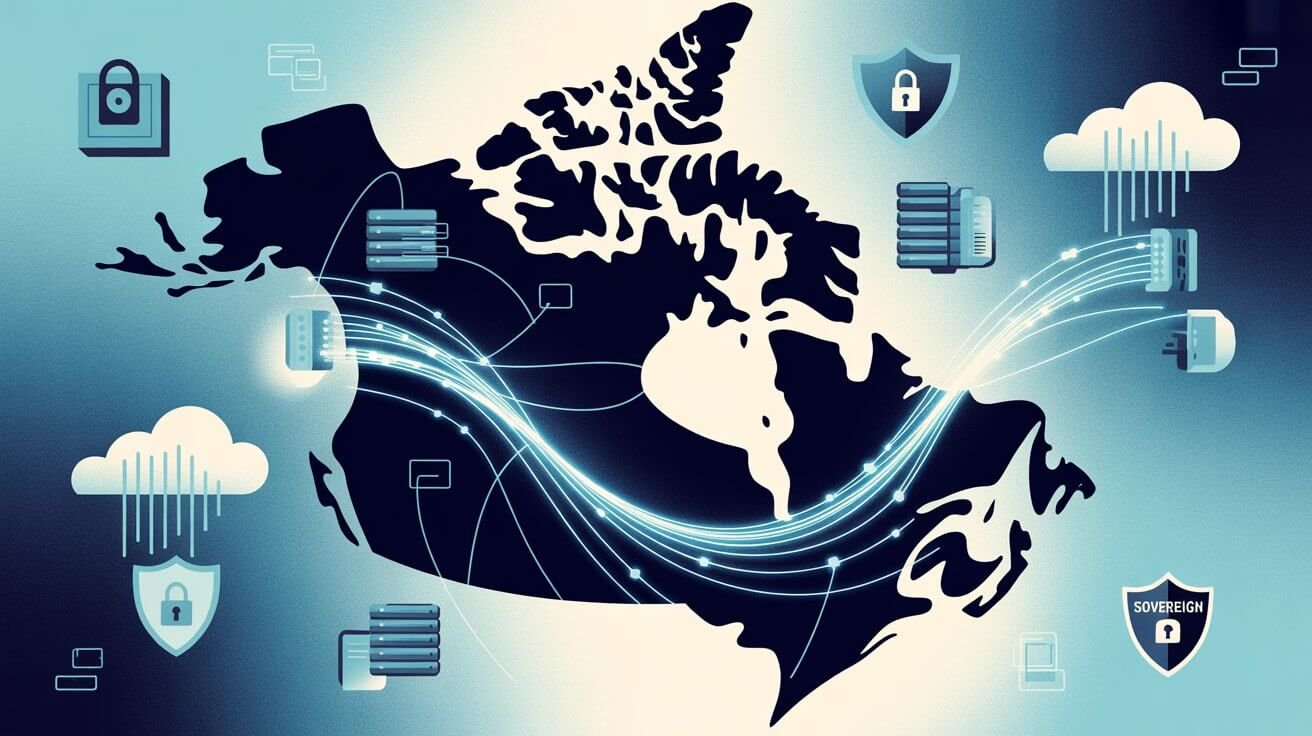

Right now, as you read this, your data is probably flowing through American servers. Moreover, your online activities are being processed by U.S. tech giants who control the majority of Canada’s digital infrastructure. This isn’t just a privacy concern—it’s a fundamental threat to Canadian digital sovereignty that demands immediate attention.
The recent wake-up call came when 70 prominent Canadians, including Margaret Atwood and former Governor General Adrienne Clarkson, signed an urgent letter to Prime Minister Mark Carney. Furthermore, they’re demanding swift action to protect Canadian digital sovereignty before it’s too late. But what exactly does this mean for ordinary Canadians?
Understanding the Current Digital Landscape in Canada
Canadian digital sovereignty refers to our nation’s right to control access to and disclosure of digital information under Canadian laws alone. However, the reality paints a troubling picture of foreign dependence.
The Numbers Don’t Lie
Currently, American companies dominate Canada’s cloud computing market:
- Amazon Web Services (AWS) holds 32% market share
- Microsoft Azure controls 20%
- Google Cloud captures 9%
- Canadian providers struggle with the remaining portion
Additionally, over 60% of Canada’s cloud infrastructure is owned by just five American companies. This means Canadian data—including sensitive government, healthcare, and business information—sits on foreign servers subject to foreign laws.
The CLOUD Act Problem
Here’s where things get concerning. The U.S. CLOUD Act allows American authorities to access any data controlled by U.S. companies, regardless of where it’s physically stored. Consequently, even if your data sits in a Toronto data center, it can be accessed by U.S. authorities if that data center is owned by an American firm.
Recently, revelations emerged that Elon Musk had access to sensitive banking data of all Americans through his political role. This demonstrates how quickly digital control can shift based on political changes.
Why Canadian Digital Sovereignty Is Under Threat
Trade Agreement Constraints
The Canada-United States-Mexico Agreement (CUSMA) actively restricts our ability to protect ourselves. Specifically, it prohibits data localization requirements that would force companies to store Canadian data on Canadian soil. Therefore, our hands are tied by our own trade commitments.
Infrastructure Dependencies
Our physical internet infrastructure routes massive amounts of Canadian data through the United States, even for domestic communications. Similarly, our satellite internet services, particularly Starlink with over 400,000 Canadian subscribers, are controlled by foreign entities.
Legislative Gaps
When Parliament was prorogued in January 2025, Bill C-27—which would have modernized our privacy laws—died on the order paper. As a result, we’re left with outdated legislation that doesn’t address modern digital sovereignty challenges.
Real-World Consequences of Lost Digital Sovereignty
National Security Risks
Foreign control over our digital infrastructure creates obvious security vulnerabilities. For instance, critical government communications could be intercepted or disrupted by hostile actors accessing American-controlled systems.
Economic Vulnerabilities
Ukraine’s dependence on SpaceX’s Starlink for internet connectivity demonstrates how foreign control weakens negotiating positions. Similarly, Canada’s reliance on American tech giants leaves us vulnerable to economic coercion.
Democratic Interference
During Canada’s 2025 federal election, AI-driven bots spread false information across social media platforms. Furthermore, foreign-controlled platforms like TikTok, Facebook, and YouTube shape Canadian political discourse without domestic oversight. This directly undermines Canadian digital sovereignty and democratic processes.
Actionable Strategies to Reclaim Canadian Digital Sovereignty
Government-Led Initiatives
The federal government has already started investing in digital independence:
The $2 Billion Sovereign AI Compute Strategy includes:
- Up to $700 million for Canadian AI data centers
- $705 million for public supercomputing infrastructure
- $300 million AI Compute Access Fund for small businesses
However, these initiatives need acceleration and broader scope to truly strengthen Canadian digital sovereignty.
Provincial Leadership Examples
British Columbia and Nova Scotia have implemented public sector rules requiring government data to remain within Canadian borders. Additionally, Quebec’s Law 25 requires privacy assessments for data sent outside the province.
Supporting Canadian Tech Companies
Several domestic companies are developing sovereign cloud solutions:
- eStruxture and ThinkOn offer Canadian-owned cloud services
- Qohash has launched the “Sovereign Shield Initiative”
- OVHcloud provides European-owned alternatives to American giants
What You Can Do to Support Canadian Digital Sovereignty
For Individuals
- Choose Canadian service providers when possible for cloud storage, email, and web hosting
- Ask questions about where your data is stored and processed
- Contact your MP to express concerns about digital sovereignty
- Stay informed about privacy policies and data handling practices
For Businesses
- Conduct data sovereignty audits to understand where your information flows
- Consider Canadian cloud providers for sensitive operations
- Implement data localization strategies where legally permissible
- Support policy changes that promote Canadian digital sovereignty
For Organizations
- Advocate for stronger privacy legislation to replace outdated laws
- Push for CUSMA renegotiation to allow data localization requirements
- Invest in Canadian tech ecosystems through procurement policies
- Develop indigenous digital capabilities rather than relying on foreign solutions
The Path Forward: Building True Digital Independence
Policy Recommendations
Experts suggest Canada should:
- Develop cloud-agnostic services for government operations
- Embrace open-source software to reduce foreign dependencies
- Create tax incentives for domestic digital infrastructure
- Establish a comprehensive national digital sovereignty strategy
International Examples
Other countries have successfully strengthened their digital sovereignty:
- France requires certain government data to remain in-country
- Sweden has developed robust domestic cloud capabilities
- Australia implemented strict data sovereignty rules for critical sectors
These examples prove that Canadian digital sovereignty is achievable with proper commitment and investment.
The Future of Canadian Digital Sovereignty
Emerging Opportunities
The current geopolitical climate actually creates opportunities for Canada:
- Growing distrust of big tech platforms
- Increasing demand for data privacy
- Rising nationalism around digital infrastructure
- Technology sector looking for American alternatives
Potential Challenges
Nevertheless, significant obstacles remain:
- Limited domestic technical capacity
- Cost of building parallel infrastructure
- Resistance from entrenched foreign providers
- Complex international trade obligations
Conclusion: The Time for Action Is Now
Canadian digital sovereignty isn’t just a policy buzzword—it’s essential for our national security, economic independence, and democratic integrity. Furthermore, with growing geopolitical tensions and increasing cyber threats, the cost of inaction continues to rise.
The 70 prominent Canadians who signed the letter to Prime Minister Carney are right: we need immediate action. Therefore, supporting Canadian tech companies, advocating for stronger legislation, and making conscious choices about our digital lives all contribute to reclaiming our digital independence.
Our online freedom depends on our ability to control our digital destiny. Consequently, Canadian digital sovereignty must become a national priority before we lose the ability to protect what matters most: our data, our democracy, and our independence.
The question isn’t whether we can afford to invest in Canadian digital sovereignty—it’s whether we can afford not to. The battle for our digital future starts now, and every Canadian has a role to play.