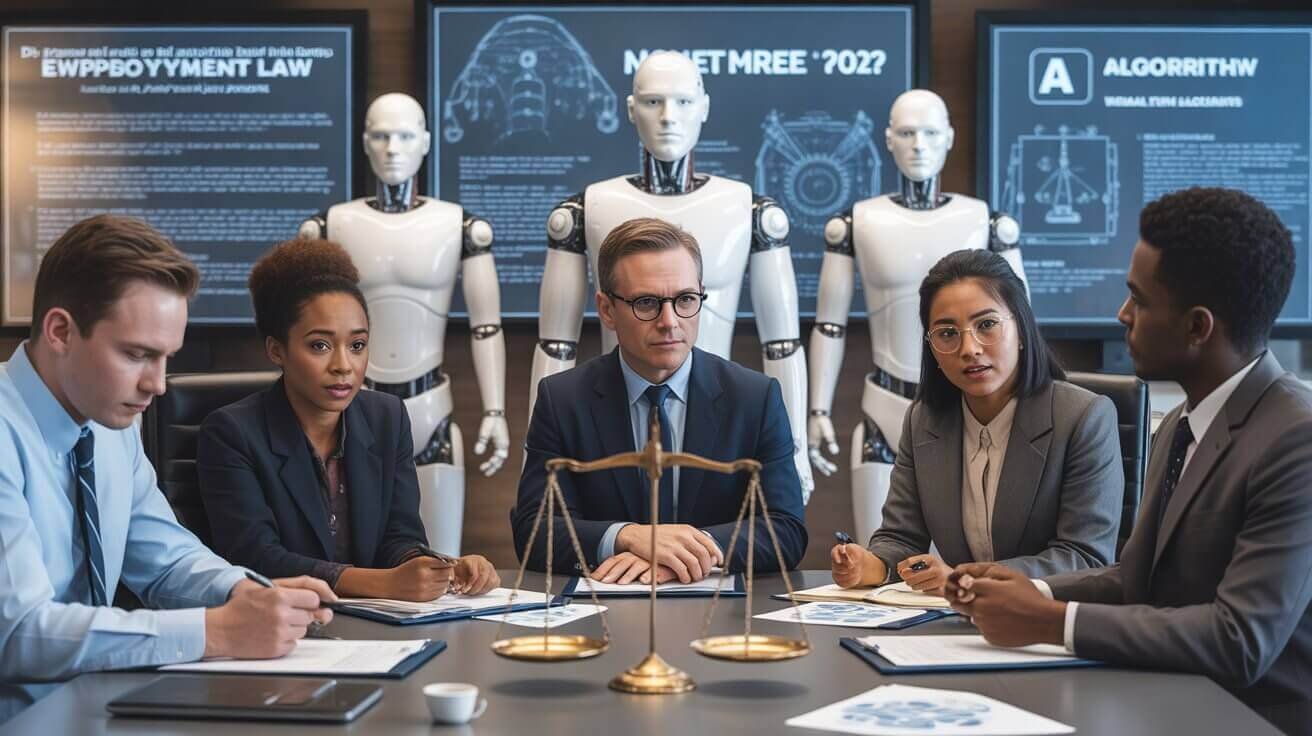

AI worker protection regulation has become the hottest topic in employment policy as we face unprecedented job displacement. These new AI worker protection regulation measures promise to safeguard workers from algorithmic discrimination and unfair automation, but they might be addressing only part of a much larger problem.
I’ve been tracking the rapid development of these laws across multiple states, and what I’m seeing is both encouraging and concerning. While policymakers rush to implement AI worker protection regulation, the technology is advancing faster than our ability to govern it effectively.
The Current State of AI Worker Protection Regulation
Right now, we’re witnessing what experts call a “regulatory patchwork” emerging across the United States. States are scrambling to create frameworks that protect workers from AI-driven discrimination while trying not to stifle innovation.
Colorado led the charge in 2024 with the Colorado Artificial Intelligence Act, becoming the first state to enact comprehensive AI worker protection regulation. The law, which takes effect in February 2026, requires employers to conduct bias audits and implement risk management policies for high-risk AI systems used in hiring, promotions, and termination decisions.
Illinois followed with legislation that requires employers to notify workers when AI influences employment decisions. Meanwhile, California’s Civil Rights Department has extended anti-discrimination regulations to cover automated decision systems, creating some of the most comprehensive protections yet.
However, the federal landscape tells a different story. The Trump administration has rolled back Biden-era AI guidance, removing EEOC guidance on responsible AI use in employment. This creates a confusing environment where state laws provide protection while federal oversight has diminished.
The Scale of the Problem: Why Regulation May Not Be Enough
The numbers paint a sobering picture of what we’re actually dealing with. According to recent data, 40% of employers expect to reduce their workforce where AI can automate tasks, and 14% of workers have already experienced job displacement due to AI.
But here’s what makes this different from previous technological disruptions: the speed and scope are unprecedented. Goldman Sachs Research estimates that AI could displace 6-7% of the US workforce if widely adopted, with entry-level jobs being hit the hardest.
The problem isn’t just about discrimination in hiring anymore. Companies like Shopify have announced they won’t hire new employees if AI can do the job instead. McKinsey has deployed thousands of AI agents to handle tasks previously done by junior consultants. This goes far beyond what current AI worker protection regulation addresses.
What Current AI Worker Protection Regulation Actually Covers
Most existing regulations focus on preventing algorithmic bias and ensuring transparency in AI-driven employment decisions. The laws typically require:
Notification Requirements: Employers must inform workers when AI systems influence employment decisions. New York City’s law requires disclosure of automated employment decision tools, while Illinois mandates notification for recruitment, hiring, and promotion decisions.
Bias Testing: Companies must conduct regular audits to check for discriminatory impacts against protected classes. Colorado’s law requires annual impact assessments for high-risk AI systems.
Human Oversight: Many regulations require meaningful human involvement in final employment decisions. California’s proposed legislation would mandate human oversight and prohibit relying primarily on AI for hiring or firing.
Record Keeping: Extended retention requirements mean employers must maintain AI-related employment records for longer periods—up to four years in some jurisdictions.
The Gap Between Regulation and Reality
Here’s where it gets complicated: current AI worker protection regulation primarily addresses discrimination, not displacement. These laws are designed to ensure fair treatment in employment decisions, but they don’t prevent companies from eliminating positions entirely.
Consider what’s happening in different industries:
Tech Sector: Over 89,000 layoffs in 2025 alone, with many directly attributed to AI automation. Entry-level programming and data analysis roles are disappearing as AI tools become more capable.
Customer Service: AI chatbots are reducing costs by 80%, making human customer service rapidly obsolete. Current regulations don’t address this wholesale replacement.
Financial Analysis: AI systems can process thousands of financial reports in minutes, making many analyst positions redundant. While bias testing might ensure fair hiring for remaining roles, it doesn’t protect the jobs being eliminated.
The Department of Labor’s AI principles acknowledge this challenge, emphasizing that “there are also risks that workers will be displaced entirely from their jobs by AI.” However, current regulations provide limited protection against this displacement.
Practical Steps Workers and Employers Can Take Now
While we wait for more comprehensive legislation, both workers and employers can take proactive measures:
For Workers:
- Master AI tools in your field immediately. The survivors will be those who complement AI rather than compete with it
- Focus on skills that require human judgment, creativity, and emotional intelligence
- Consider retraining programs—120 million workers need retraining within three years according to recent estimates
- Document your unique contributions that go beyond tasks AI can perform
For Employers:
- Conduct regular bias audits of any AI systems used in employment decisions
- Implement transparent policies about AI use and provide clear notification to employees
- Consider human-AI hybrid roles rather than wholesale replacement
- Invest in retraining existing employees for new responsibilities that work alongside AI
The key insight from my research is that companies implementing thoughtful AI integration, rather than replacement strategies, tend to see better long-term outcomes for both productivity and employee satisfaction.
Future Implications: What Comes Next
Looking ahead, AI worker protection regulation will likely evolve in several directions. First, we’ll probably see federal legislation that provides uniform standards across states. The current patchwork creates compliance challenges that national companies struggle to navigate.
Second, regulations may expand beyond discrimination to address displacement directly. Some proposed legislation includes provisions for mandatory retraining programs and transition support for workers whose jobs are eliminated by AI.
Third, international coordination seems inevitable. The EU’s AI Act already provides a framework that other regions are studying, and we’re likely to see convergence toward global standards for AI in employment.
However, the fundamental challenge remains: technology advances exponentially while regulation moves incrementally. By the time comprehensive AI worker protection regulation is fully implemented, the employment landscape may have already transformed dramatically.
The Bottom Line
AI worker protection regulation represents an important first step, but it’s not sufficient to address the full scope of AI’s impact on employment. Current laws focus on preventing discrimination in existing roles while offering little protection against the elimination of entire job categories.
The most effective approach likely combines regulatory protection with proactive workforce development. Rather than just regulating how AI makes employment decisions, we need policies that help workers adapt to an AI-integrated economy.
Workers can’t wait for perfect regulation to emerge. The smartest strategy is to start building AI literacy and focusing on uniquely human skills now, while advocating for more comprehensive protections that address displacement, not just discrimination.
The technology isn’t waiting for us to catch up. Neither should our approach to protecting the workforce from its most disruptive impacts.