
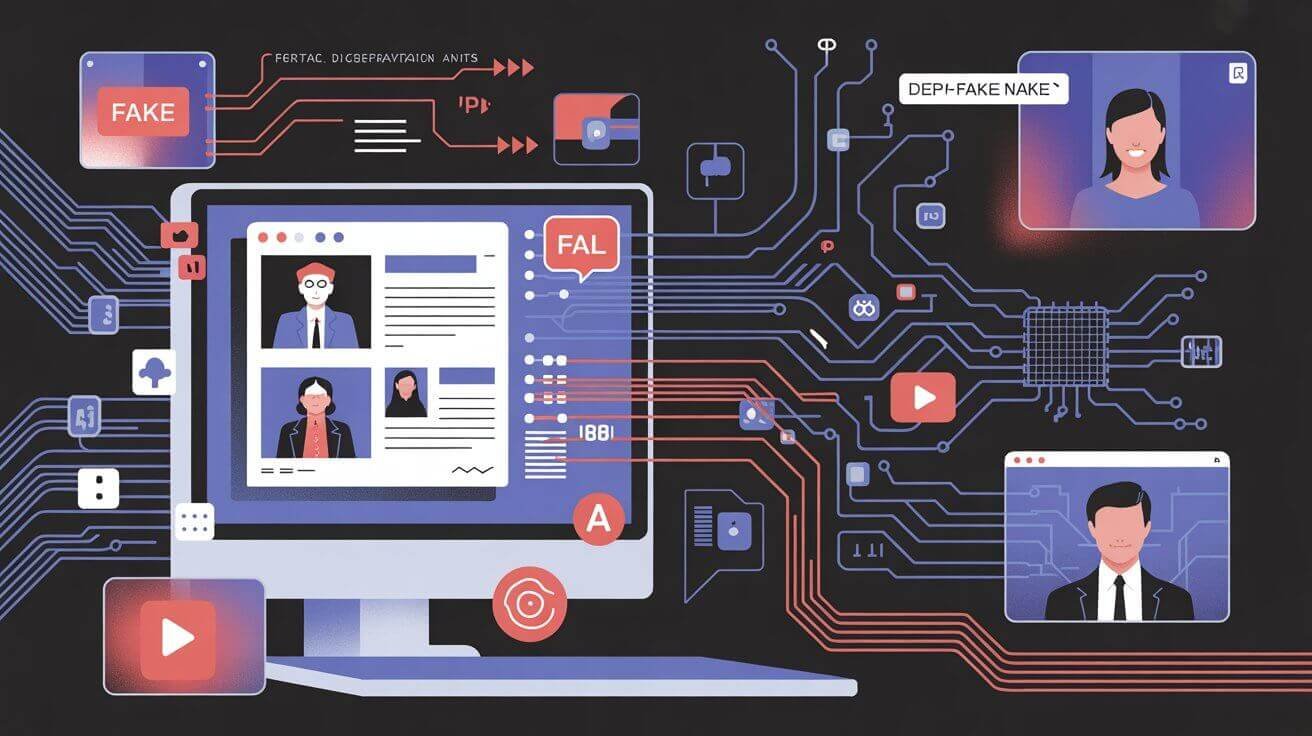

Russian operatives are flooding the internet with sophisticated fake content that looks startlingly real. Meanwhile, the tools driving this crisis—AI disinformation technology—have become so advanced that even seasoned journalists struggle to spot the fakes. What’s more troubling is that while these digital weapons grow stronger, the systems meant to protect us are being dismantled piece by piece. The AI disinformation technology behind these attacks isn’t just creating isolated fake videos anymore; it’s systematically poisoning the information ecosystem that millions rely on for news.
How Russia’s AI Disinformation Technology Propaganda Machine Actually Works
Russian disinformation campaigns have evolved far beyond simple fake social media posts. Today’s operations leverage cutting-edge AI disinformation technology to create convincing fake news videos, corrupt search results, and even manipulate AI chatbots that millions use daily.
Furthermore, the scale is staggering. More than 3.6 million articles were published last year, finding their way into leading Western chatbots, according to the American Sunlight Project. These aren’t random posts—they’re part of coordinated networks designed to flood the internet with pro-Kremlin narratives.
The Storm-1679 Operation: AI Deepfake Technology Goes Mainstream
One particularly sophisticated campaign, known as Storm-1679, demonstrates just how far disinformation technology has advanced. Moreover, this operation creates fake videos that impersonate legitimate news outlets like E! News and Netflix, complete with AI-generated voices and convincing visual effects.
The operation’s breakthrough moment came when Donald Trump Jr. and Elon Musk fell for the scam. Both reposted the video on X. A fabricated E! News video falsely claimed that USAID paid celebrities to visit Ukraine, spreading to millions before fact-checkers could respond.
Additionally, these aren’t amateur productions anymore. The fake content includes:
- AI-generated deepfake voices mimicking real celebrities
- Professional-looking graphics and logos
- Coordinated distribution across multiple platforms
- Timing designed to coincide with major news events
The AI Technology Behind Modern Disinformation Campaigns
Understanding how AI disinformation technology works reveals why these campaigns have become so effective. Consequently, traditional detection methods struggle to keep pace with rapidly improving artificial intelligence tools.
Generative Adversarial Networks: The Engine of Deception
The backbone of modern fake content creation relies on Generative Adversarial Networks (GANs). GANs consist of two neural networks: a generator that creates the fake content and a discriminator that attempts to identify the fake. These two networks are pitted against each other in a continuous feedback loop.
This adversarial process creates an arms race where fake content becomes increasingly sophisticated. Therefore, each iteration produces more convincing results that fool both humans and detection algorithms.
LLM Grooming: AI Disinformation Poisoning Chatbots from Within
Perhaps the most insidious development involves what researchers call “LLM grooming”—systematically corrupting large language models with propaganda. By strategically placing its content so it will be integrated into large language models, it is ensuring that pro-Russia propaganda and disinformation will be regurgitated in perpetuity.
The Pravda network exemplifies this strategy perfectly. Rather than targeting human readers directly, these operations flood the internet with content designed specifically for AI systems to consume and learn from. Subsequently, when people ask chatbots questions, they receive responses tainted with disinformation.
Real-World Impact: When AI-Generated Fake News Shapes Reality
The consequences of advanced AI disinformation technology extend far beyond social media noise. Instead, these campaigns actively influence public opinion, election outcomes, and policy decisions across democratic nations.
Election Interference Goes High-Tech with AI Tools
Over the past months, the campaign has created and disseminated false claims about German politicians using AI and deepfake technology. For instance, fake videos accused prominent German leaders of sexual misconduct and corruption—all timed perfectly for maximum electoral impact.
These attacks follow a predictable pattern:
- Target key political figures during crucial campaign periods
- Create multiple versions of fake content for broader reach
- Use legitimate-seeming news sources to add credibility
- Coordinate distribution through bot networks for viral spread
The Chatbot Contamination Crisis
The world’s most popular artificial intelligence (AI) chatbots are infected with Russian disinformation, according to a study published Thursday. This contamination means millions of users receive biased information without realizing it.
The implications are profound. When students research topics for school projects, professionals seek quick facts for presentations, or journalists verify information for stories, they might unknowingly access corrupted data. Essentially, the information supply chain itself has been compromised.
How Governments Are Failing to Fight Back
While disinformation campaigns grow more sophisticated, the response from democratic governments has been disappointingly weak. Unfortunately, political considerations often override security concerns when it comes to counter-disinformation efforts.
The Trump Administration’s Rollback
The State Department, under Sec. Marco Rubio, shut down the agency’s office that battles against foreign disinformation. Rubio claimed — without evidence — that the office was spending “millions of dollars to actively silence and censor the voices of Americans they were supposed to be serving.”
This decision eliminated crucial capabilities just when they’re needed most. Previously, these offices identified state-backed disinformation campaigns and coordinated responses across platforms. Now, researchers work with less support and fewer resources.
The Detection Challenge
A recent report from Meta confirms this, claiming that less than 1% of all fact-checked misinformation during the 2024 election cycles was AI content. However, this statistic might be misleading—it could indicate that AI-generated content is so sophisticated that fact-checkers missed most of it.
Current detection methods face several limitations:
- AI-generated content improves faster than detection algorithms
- Manual fact-checking can’t keep pace with automated content creation
- Cross-platform coordination makes tracking difficult
- Limited access to platform data hampers research
Practical Steps to Protect Yourself from AI Disinformation Technology
Understanding the threat is only the first step. Fortunately, there are concrete actions individuals can take to avoid falling victim to sophisticated disinformation campaigns.
Develop Critical Evaluation Skills
Start by questioning everything that seems designed to provoke strong emotions. Disinformation campaigns specifically target our psychological triggers to bypass rational thinking. Therefore, when content makes you angry, scared, or outraged, pause before sharing.
Look for these red flags in suspicious content:
- Extreme claims without credible sources
- Professional-looking videos from unknown outlets
- Stories that confirm your existing beliefs too perfectly
- Content that appeared suddenly across multiple platforms
Verify Before You Share
Always check multiple sources before sharing news content, especially during election periods or major crises. Cross-reference information with established news organizations that have fact-checking standards and editorial oversight.
Additionally, use reverse image searches and fact-checking websites to verify suspicious visual content. Tools like Google Images and TinEye can help identify when photos or videos have been manipulated or taken out of context.
Understand Platform Limitations
Social media algorithms prioritize engagement over accuracy, making them perfect vehicles for disinformation spread. Consequently, the most viral content often includes the most emotionally charged—and potentially false—information.
Be especially skeptical of content that:
- Lacks clear authorship or publication dates
- Uses sensational headlines with minimal supporting evidence
- Appears designed primarily to generate shares and comments
- Comes from accounts with suspicious posting patterns
The Future of AI-Powered Information Warfare
AI disinformation technology will only become more sophisticated, making the current crisis seem manageable by comparison. Consequently, we need better strategies, stronger institutions, and more informed citizens to protect democratic discourse.
Emerging Threats on the Horizon
Next-generation disinformation campaigns will likely include:
- Real-time deepfake generation during live events
- Personalized fake content targeting individual users
- AI systems that can maintain consistent fake personas across years
- Coordinated attacks on multiple information systems simultaneously
Building Resilience
The solution requires cooperation between technology companies, governments, civil society, and individual citizens. Moreover, we need proactive approaches rather than reactive responses to stay ahead of evolving threats.
Promising developments include:
- Advanced detection algorithms that identify subtle manipulation patterns
- Blockchain-based verification systems for authentic content
- Media literacy programs that teach critical thinking skills
- International cooperation frameworks for coordinated responses
As AI disinformation technology continues evolving, our response must evolve too. The stakes couldn’t be higher—the integrity of democratic discourse itself hangs in the balance. By understanding these threats and taking concrete action, we can work together to preserve the foundation of informed citizenship that democracy requires..