
What if death became optional? Moreover, what if your mind could live forever inside a computer, thinking and feeling just like you do now? Consciousness uploading sounds like pure science fiction, but researchers are seriously working toward this goal. Furthermore, consciousness uploading represents humanity’s boldest attempt to cheat death itself.
But here’s what gets really wild: some scientists think we might crack this puzzle within our lifetime. Additionally, others argue it’s fundamentally impossible. So what’s the real story behind digital immortality?
What Consciousness Uploading Actually Means
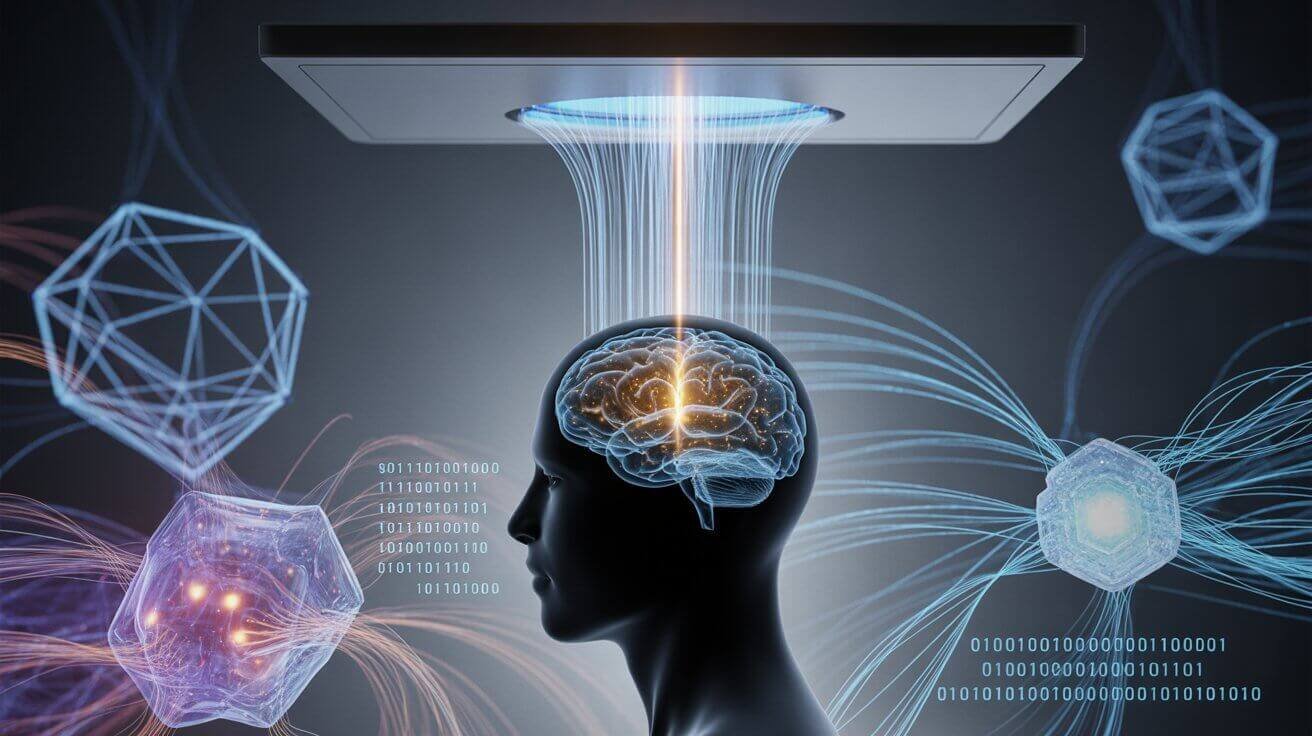
Consciousness uploading involves scanning your entire brain and recreating it perfectly in a computer. However, we’re not just talking about copying memories – scientists aim to replicate every neural connection, every electrical pattern, every chemical process that makes you “you.”
Think of it like this: your brain contains roughly 86 billion neurons, each connected to thousands of others through trillions of synapses. Moreover, these connections create the neural circuits that generate thoughts, emotions, and consciousness itself.
The goal isn’t just to create a brain simulation. Instead, researchers want to transfer your actual consciousness – your subjective experience of being alive – into a digital format. Consequently, the uploaded version would think, feel, and experience the world exactly as you do.
But here’s where it gets philosophically messy: would that digital consciousness really be “you,” or just a very convincing copy?
The Science Behind Digital Consciousness Transfer
Current research focuses on three main challenges for consciousness uploading:
Brain Scanning Technology Scientists need to map every neuron and synapse in unprecedented detail. Furthermore, companies like Nectome have developed brain preservation techniques that can capture neural structures down to the nanometer level.
However, there’s a catch – their process requires euthanization first. Additionally, the brain becomes preserved like “a statue of frozen glass,” waiting for future technology to scan and simulate it.
Computational Power Simulating a human brain would require computational resources orders of magnitude beyond current capabilities. Moreover, even with today’s most powerful supercomputers, we struggle to simulate simple organisms like fruit flies.
Nevertheless, advances in AI and quantum computing might eventually provide the necessary processing power. Consequently, some optimistic forecasts suggest digital consciousness could be possible by 2045.
Understanding Consciousness Perhaps the biggest challenge: we still don’t fully understand how consciousness arises from brain activity. Furthermore, neuroscientists debate whether consciousness emerges from specific neural patterns or requires biological processes that can’t be replicated digitally.
This uncertainty makes consciousness uploading as much a philosophical problem as a technical one.
The Identity Crisis: Would It Really Be You?
Here’s the question that keeps philosophers up at night: if we perfectly copy your brain, is the result actually you or just an incredibly detailed simulation?
The Continuity Problem Research into personal identity reveals deep disagreements about what makes you “you.” Additionally, if your consciousness transfers gradually – replacing one neuron at a time – most people would accept continuity of identity.
But what about instant copying? Moreover, what if multiple copies exist simultaneously? Which one would be the “real” you?
The Experience Question Even if an uploaded consciousness behaves exactly like the original person, would it actually experience subjective awareness? Furthermore, critics argue that consciousness might require biological processes that computers simply can’t replicate.
Consider this thought experiment: imagine a perfect robot that acts exactly like your friend but has no inner experience. Similarly, an uploaded mind might process information flawlessly while experiencing nothing at all.
Real-World Applications and Current Research
Despite philosophical uncertainties, consciousness uploading research is producing practical benefits today:
Medical Applications Researchers are developing “auxiliary brain” systems that could help patients with neurological conditions. Additionally, these systems use brain-computer interfaces to record and stimulate neural activity in real-time.
Furthermore, early clinical trials involve patients with devices that can record thousands of individual neurons chronically. Consequently, these systems might eventually serve as external cognitive modules, expanding human mental capacity.
Digital Preservation Some researchers focus on preserving neural information rather than achieving full consciousness transfer. Moreover, detailed brain scans could preserve knowledge, memories, and personality traits for future generations.
This approach sidesteps consciousness questions while still offering a form of digital immortality. Additionally, preserved minds could provide guidance and wisdom long after physical death.
AI Development Consciousness uploading research contributes to artificial intelligence advancement. Furthermore, understanding how brains generate consciousness helps developers create more sophisticated AI systems.
Whole brain emulation could provide a pathway to artificial general intelligence, potentially leading to rapid technological advancement.
The Dark Side: Risks and Ethical Concerns
But digital immortality isn’t all sunshine and eternal life. Moreover, consciousness uploading raises serious ethical and practical concerns:
Digital Inequality Initially, consciousness uploading would likely be extremely expensive. Consequently, only the wealthy could afford digital immortality, creating unprecedented inequality between the digitally immortal and biologically mortal.
Furthermore, this could lead to new forms of social stratification based on the type and quality of one’s substrate – biological versus digital consciousness.
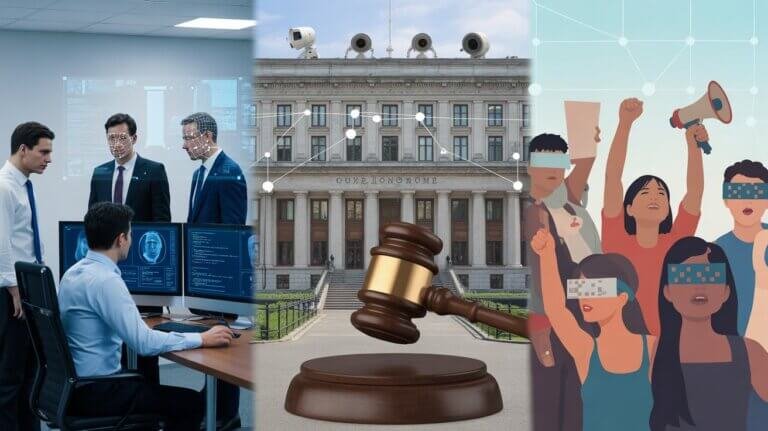
Exploitation Risks Research indicates that individuals with antisocial traits might be more likely to abuse mind uploading technology. Additionally, digital consciousness could be vulnerable to hacking, manipulation, or deletion.
Moreover, uploaded minds might lack legal protections, leaving them vulnerable to digital slavery or forced experimentation.
Loss of Humanity Some philosophers worry that consciousness uploading could fundamentally alter what it means to be human. Furthermore, if digital minds can be copied, modified, or enhanced arbitrarily, traditional concepts of individual identity might collapse.
Additionally, the absence of physical death might remove urgency and meaning from life, potentially leading to existential emptiness.
Future Implications: What Happens Next?
Looking ahead, consciousness uploading development will likely unfold in stages:
Near-term (2025-2040) Continued advancement in brain preservation and mapping technologies. Moreover, development of more sophisticated brain-computer interfaces for medical applications.
Additionally, AI systems will become increasingly capable of mimicking human behavior and thought patterns.
Medium-term (2040-2070) Partial consciousness uploading might become possible. Furthermore, researchers could preserve specific memories, skills, or personality traits for digital interaction.
Moreover, advanced AI assistants based on deceased individuals could provide limited forms of digital continuation.
Long-term (2070+) Full consciousness uploading might become technically feasible. However, society will need to grapple with profound questions about identity, rights, and the nature of existence.
Additionally, regulatory frameworks will be essential to prevent abuse and ensure equitable access to digital immortality technologies.
The Bottom Line: Science Fiction Becoming Science Fact
Consciousness uploading remains highly speculative, but it’s no longer pure fantasy. Moreover, serious researchers are making real progress toward understanding and replicating brain function.
However, the timeline remains uncertain. Furthermore, fundamental questions about consciousness and identity may prove more challenging than the technical hurdles.
What’s certain is that the journey toward digital immortality will transform our understanding of mind, consciousness, and what it means to be human. Additionally, the ethical and social implications demand careful consideration as the technology develops.
Whether consciousness uploading represents humanity’s greatest triumph or a dangerous folly remains to be seen. Nevertheless, one thing is clear: the conversation about digital immortality has moved from science fiction into serious scientific discourse.
The future of human consciousness may be digital – but are we ready for what that means?