
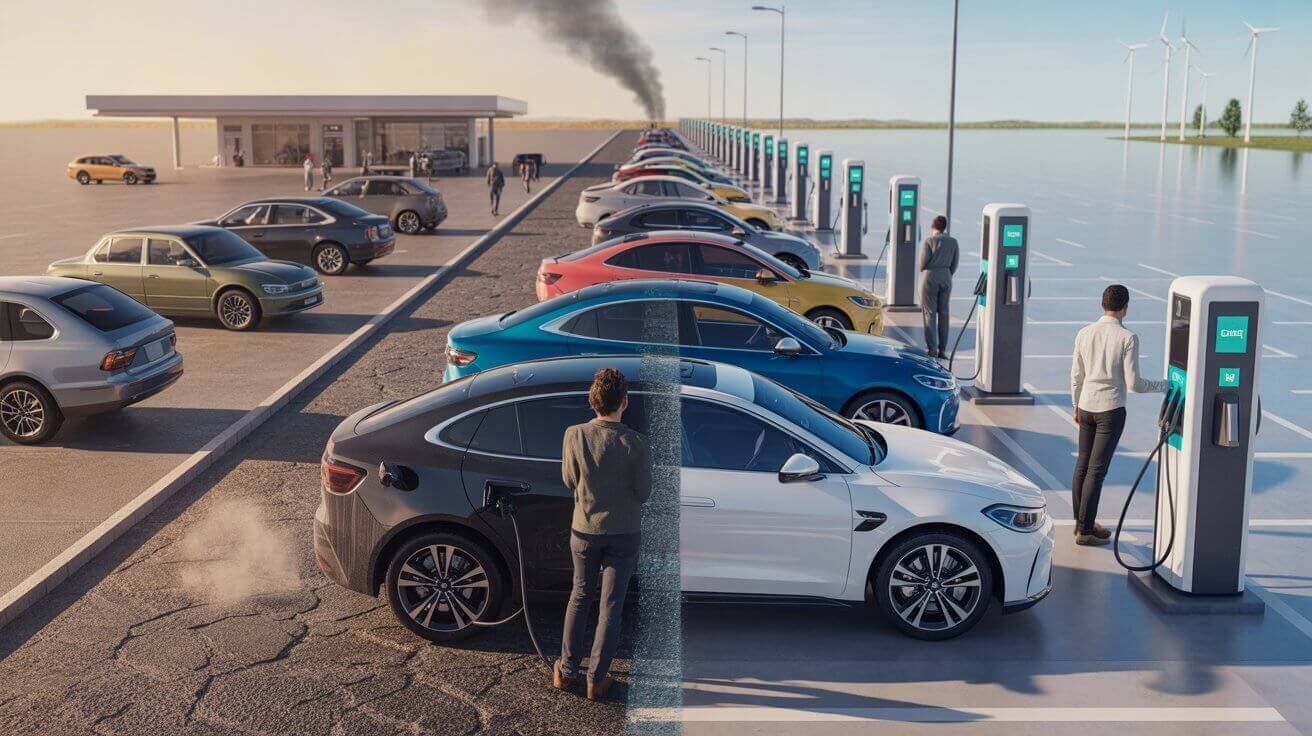

The electric vehicle transformation is no longer a distant dream—it’s reshaping our roads right now. Furthermore, this shift represents the biggest change in transportation since Henry Ford’s assembly line, touching everything from how we commute to work to how entire cities plan their energy infrastructure. Moreover, the electric vehicle transformation brings both exciting opportunities and real challenges that every driver should understand.
What makes this revolution so compelling isn’t just the environmental benefits, though those are significant. Additionally, the electric vehicle transformation offers practical advantages like lower maintenance costs, quieter operation, and that instant torque that makes merging onto highways surprisingly fun. However, like any major change, it comes with hurdles we need to navigate together.
The Current State of Electric Vehicle Adoption
Explosive Growth Across Global Markets
The numbers tell a remarkable story about our transportation future. According to BloombergNEF’s 2025 outlook, electric vehicles are set to represent one in four cars sold this year globally. Furthermore, some markets have already reached impressive milestones—Norway achieved 88% of car sales being battery electric vehicles in 2024, while China dominates with over half of vehicles sold there now electric.
The momentum varies significantly by region, though. In the United States, adoption has been slower but steady, while Europe is experiencing rapid acceleration thanks to stricter emissions standards. Meanwhile, emerging economies like Vietnam, Thailand, and Brazil have seen EV sales rise dramatically, often achieving higher adoption rates than wealthier countries.
This geographic diversity in the electric vehicle transformation reflects different policy approaches, infrastructure readiness, and consumer preferences. Moreover, it shows that there’s no single path to electrification—each market finds its own way forward.
Policy Changes Driving Transformation
Government policies play a crucial role in accelerating the electric vehicle transformation. The European Union’s Alternative Fuels Infrastructure Regulation requires fast charging stations every 60 kilometers along major transport networks, while various countries offer purchase incentives and tax breaks for EV buyers.
However, policy support isn’t universal or permanent. In the United States, federal tax credits face uncertainty under changing political landscapes, though many state-level incentives remain strong. Additionally, some European countries have reduced or eliminated purchase subsidies, leading to temporary slowdowns in sales growth.
The lesson here is clear: while government support helps jump-start markets, the electric vehicle transformation ultimately depends on making EVs attractive to consumers on their own merits.
The Advantages of Electric Vehicle Transformation
Environmental and Health Benefits
The environmental case for electric vehicles grows stronger each year. According to Transport & Environment’s analysis, Europe is set to save 20 million tonnes of CO2 in transport emissions in 2025 thanks to EV uptake. Furthermore, future predictions suggest that by 2035, using EVs could help avoid 2 billion tonnes of carbon dioxide equivalent emissions globally.
But the benefits extend beyond climate change. Electric vehicles eliminate local air pollution, making cities healthier places to live. Moreover, they operate much more quietly than traditional cars, reducing noise pollution in urban areas—a quality-of-life improvement that’s easy to overlook until you experience it.
The environmental advantages become even more pronounced as electricity grids incorporate more renewable energy sources. Additionally, Vehicle-to-Grid (V2G) technology allows EVs to store excess renewable energy and feed it back to the grid when needed, turning cars into mobile energy storage systems.
Economic Advantages for Owners
The financial benefits of the electric vehicle transformation go beyond fuel savings. Electric motors have fewer moving parts than internal combustion engines, resulting in lower maintenance costs over the vehicle’s lifetime. Furthermore, you’ll never need oil changes, spark plug replacements, or complex transmission repairs.
Charging at home costs significantly less than buying gasoline, especially when you can charge during off-peak hours. Moreover, many utilities offer special EV charging rates that make electricity even cheaper for vehicle owners. The total cost of ownership often favors electric vehicles, even when purchase prices remain higher than comparable gas cars.
Additionally, many regions offer non-monetary benefits like access to carpool lanes, preferred parking spots, and exemptions from congestion charges. These perks can save time and money in ways that don’t show up in simple fuel cost calculations.
Enhanced Driving Experience
The electric vehicle transformation isn’t just about being environmentally responsible—it’s about enjoying a better driving experience. Electric motors provide instant torque, delivering smooth, quiet acceleration that feels effortless. Furthermore, the low center of gravity from battery placement improves handling and stability.
Many drivers also appreciate the simplicity of electric vehicle operation. There’s no need to warm up the engine, and regenerative braking means you can often drive using just the accelerator pedal in stop-and-go traffic. Moreover, over-the-air updates can improve your vehicle’s performance and add new features without visiting a dealership.
Challenges Facing Electric Vehicle Transformation
Charging Infrastructure Limitations
Despite rapid expansion, charging infrastructure remains the biggest hurdle in the electric vehicle transformation. While global charging infrastructure continues growing, the network isn’t evenly distributed geographically or by charging speed. Furthermore, rural areas often lack adequate fast-charging options, making long-distance travel challenging for some EV owners.
The situation is improving rapidly, though. Tesla’s decision to open its Supercharger network to other brands represents a major breakthrough, providing access to one of the most reliable fast-charging networks. Additionally, new technologies like megawatt charging systems promise to reduce charging times dramatically, with some systems now delivering 400 kilometers of range in just 5 minutes.
However, charging infrastructure expansion requires significant investment and coordination between multiple stakeholders. Moreover, grid upgrades are often necessary to support high-power charging stations, adding complexity and cost to deployment efforts.
Battery Technology and Cost Concerns
Battery technology continues improving, but challenges remain. Current lithium-ion batteries can be sensitive to extreme temperatures, and replacement costs, while declining, can still be substantial. Furthermore, battery degradation over time affects vehicle range and resale value, though most manufacturers now offer 8-year warranties on battery packs.
The good news is that battery technology is advancing rapidly. According to research from CATL and BYD, new battery technologies promise faster charging and longer lifespans. Additionally, the Department of Energy is investing in reducing battery costs from more than $120/kWh today to $60/kWh by 2030, which would bring EVs to near cost parity with gasoline vehicles.
Moreover, emerging solid-state battery technology offers the potential for even higher energy density and faster charging, though commercial deployment remains several years away.
Range Anxiety and Consumer Perception
Many potential buyers still worry about running out of charge, despite modern EVs offering 250-400 miles of range—more than enough for most daily driving needs. Furthermore, this “range anxiety” often stems from unfamiliarity with electric vehicle capabilities rather than actual limitations.
Consumer education plays a crucial role in addressing these concerns. Most EV owners discover that 80% of charging happens at home, making daily charging as simple as plugging in a smartphone. Additionally, trip planning apps and in-vehicle navigation systems now seamlessly route drivers through charging stations for longer journeys.
The electric vehicle transformation requires changing deeply ingrained habits around fueling vehicles. However, once drivers experience the convenience of home charging and the performance of electric motors, most wouldn’t consider going back to gasoline cars.
Practical Steps for Embracing Electric Vehicle Transformation
Evaluating Your Readiness for EVs
Before joining the electric vehicle transformation, honestly assess your driving patterns and charging options. Calculate your daily and weekly mileage to determine if current EV ranges meet your needs. Furthermore, investigate home charging options—having a dedicated charging setup dramatically improves the EV ownership experience.
Consider your typical driving routes and identify available charging stations along frequently traveled paths. Moreover, factor in your parking situation, as apartment dwellers may face different challenges than homeowners with garages. Many workplaces now offer charging stations, which can supplement home charging for those without dedicated parking.
Research available incentives in your area, including federal tax credits, state rebates, and utility programs. Additionally, investigate total cost of ownership by comparing fuel costs, maintenance expenses, and financing options between electric and gasoline vehicles.
Choosing the Right Electric Vehicle
The electric vehicle transformation offers increasingly diverse options across all vehicle categories. Consider your specific needs: city commuting, family hauling, outdoor adventures, or luxury preferences. Furthermore, evaluate charging speeds, as faster DC fast charging capability becomes more important for frequent long-distance travel.
Test drive multiple models to experience differences in performance, comfort, and technology features. Moreover, consider the charging network compatibility, especially as standards evolve toward common connector types. Many manufacturers now offer or plan to adopt the J3400 connector, providing access to Tesla’s extensive Supercharger network.
Don’t forget to factor in delivery times, as popular models may have waiting lists. Additionally, consider certified pre-owned EVs, as the used electric vehicle market continues maturing and offering more affordable options.
Maximizing Your Electric Vehicle Experience
Once you join the electric vehicle transformation, optimize your experience through smart charging habits. Charge during off-peak hours when electricity rates are lower, and avoid charging to 100% daily unless necessary for long trips. Furthermore, learn to use regenerative braking effectively to maximize range and reduce brake wear.
Install appropriate home charging equipment based on your needs and electrical capacity. Moreover, familiarize yourself with public charging networks and their payment systems before you need them. Many charging networks offer mobile apps that simplify finding and paying for charging sessions.
Take advantage of your EV’s connected features, including remote climate control, charging scheduling, and over-the-air updates. Additionally, explore vehicle-to-load capabilities if available, as some EVs can power external devices or even your home during outages.
The Future of Electric Vehicle Transformation
Technological Breakthroughs on the Horizon
The electric vehicle transformation is accelerating thanks to rapid technological advancement. Solid-state batteries promise dramatically faster charging and higher energy density, potentially enabling 1,000-mile ranges. Furthermore, wireless charging technology could eliminate the need for physical connections, making charging as simple as parking over a charging pad.
Autonomous driving technology will likely accelerate EV adoption through robotaxi fleets, where the economics strongly favor electric vehicles due to their lower operating costs. Moreover, Vehicle-to-Everything (V2X) communication will enable EVs to interact with traffic infrastructure, optimizing traffic flow and energy usage.
Manufacturing innovations continue reducing costs and improving quality. Additionally, new materials and production techniques promise lighter, more efficient vehicles with longer lifespans and better recyclability.
Infrastructure Evolution
The charging infrastructure supporting the electric vehicle transformation will become increasingly sophisticated. Megawatt charging systems will enable ultra-fast charging for both passenger cars and heavy-duty trucks, making electric vehicles practical for virtually any use case. Furthermore, smart charging systems will automatically optimize charging times based on grid conditions and electricity prices.
Battery swapping technology may gain traction in certain markets, particularly for commercial fleets where minimizing downtime is crucial. Moreover, integration with renewable energy sources will make charging cleaner and potentially cheaper as solar and wind power costs continue declining.
Grid integration will become bidirectional, with EVs providing valuable services like frequency regulation and peak demand management. Additionally, charging infrastructure will increasingly incorporate battery storage to reduce grid strain and provide resilience during outages.
Market Predictions and Timeline
Industry experts project that EVs will comprise the majority of new vehicle sales in most major markets by 2030. According to McKinsey’s consumer research, 45% of Chinese respondents plan their next car to be electric, compared with 23% in Europe and 12% in the United States.
The electric vehicle transformation will likely follow an S-curve pattern, with adoption accelerating rapidly once infrastructure and cost barriers diminish. Furthermore, as more people experience EVs through shared mobility services and fleet vehicles, consumer acceptance will increase.
Commercial vehicle electrification will follow a similar but slightly delayed timeline, with urban delivery trucks and buses leading the transition. Moreover, long-haul trucking will electrify as battery technology and charging infrastructure mature to support their demanding operational requirements.
The electric vehicle transformation represents more than just switching from gasoline to electricity—it’s fundamentally reshaping how we think about transportation, energy, and urban planning. Furthermore, this change brings both tremendous opportunities and real challenges that require thoughtful navigation.
Success in this transformation depends on continued technological advancement, smart infrastructure investment, and consumer education. Moreover, policy support remains important for accelerating adoption, though market forces increasingly favor electric vehicles on their own merits.
For individuals considering the switch, the electric vehicle transformation offers compelling benefits: lower operating costs, better performance, and the satisfaction of driving cleaner technology. Additionally, as infrastructure expands and technology improves, the practical advantages will only increase.
The future looks increasingly electric, and the transformation is happening faster than most experts predicted just a few years ago. Whether you’re ready to make the switch today or planning for tomorrow, understanding this revolution helps you prepare for a transportation future that’s already arriving on our roads.